

Developing, Deepening & Refining Your Characters (How to Create Relatable Characters for Children's Books, Part 3)
The KidLit Creator's Chronicle - Issue #37

Welcome to part three of our series on creating relatable picture book characters. (If you haven’t read the first two, you might want to check out Part One and Part Two first. They lay the groundwork for everything we cover in this edition. Though, you can read this edition on its own.)
Let’s go over how to add the specific traits to your character that makes them recognisably childlike, distinct, and emotionally real, and we’ll also explore if (and when) you can have more than one main character in a picture book.
Creating Relatable Characters in Picture Books
An essential part of creating a character that is relatable is to make the character feel real - someone a child could imagine being, playing with, or remembering long after the story ends.
Relatability isn’t just about being nice. It’s about being human-like (even if your character is a worm, a robot, or a talking tree).
So how do you create a character that feels real, relatable, and memorable?
Let’s look at three specific traits that matter:
childlike perspective
memorable details
character-specific quirks
Childlike vs. Childish
A childlike character captures the world as a child sees it, with curiosity, imagination, fluid emotions, and sometimes big feelings over small things.
A childish character, on the other hand, often comes across as whiny, bratty, or exaggerated, showing surface-level behaviour without emotional depth. They feel less like real children and more like a parody of one, which makes them harder to relate to and less appealing to both kids and adults.
So, you most definitely want to create a childlike character, not a childish one.
Your character doesn’t need to be a child. But they should think and feel like one.
That means they might:
fixate on something adults would dismiss,
feel deeply about seemingly small stakes,
misunderstand adult language or rules,
believe in the impossible (because they haven’t learned not to),
experience emotions in big, visible ways.

Think about Amelia Bedelia. Her misunderstandings come from literal thinking, something many children recognise in themselves. Or the Pigeon from Don’t Let the Pigeon Drive the Bus! He is wildly emotional, full of excuses and loud opinions; the perfect embodiment of toddler logic.
To write characters that feel childlike (and not childish), get curious about how children experience the world:
What would they notice first in a new place?
What would feel unfair or scary to them?
What makes them feel proud, silly, brave, embarrassed?
When your character’s voice and choices reflect a child’s emotions and logic, readers will connect with them, even if the character is a crayon, a bear, or a vegetable.
Memorable Traits
You’ve likely heard this before: “Make your character memorable.” But what does that really mean?
It means the reader can recall your character even after closing the book and that they leave an impression.
Memorable characters tend to have:
A strong personality or emotional trait (shy, bold, silly, defiant)
A clear way of expressing themselves (in words, actions, or reactions)
Something specific that sets them apart from other characters
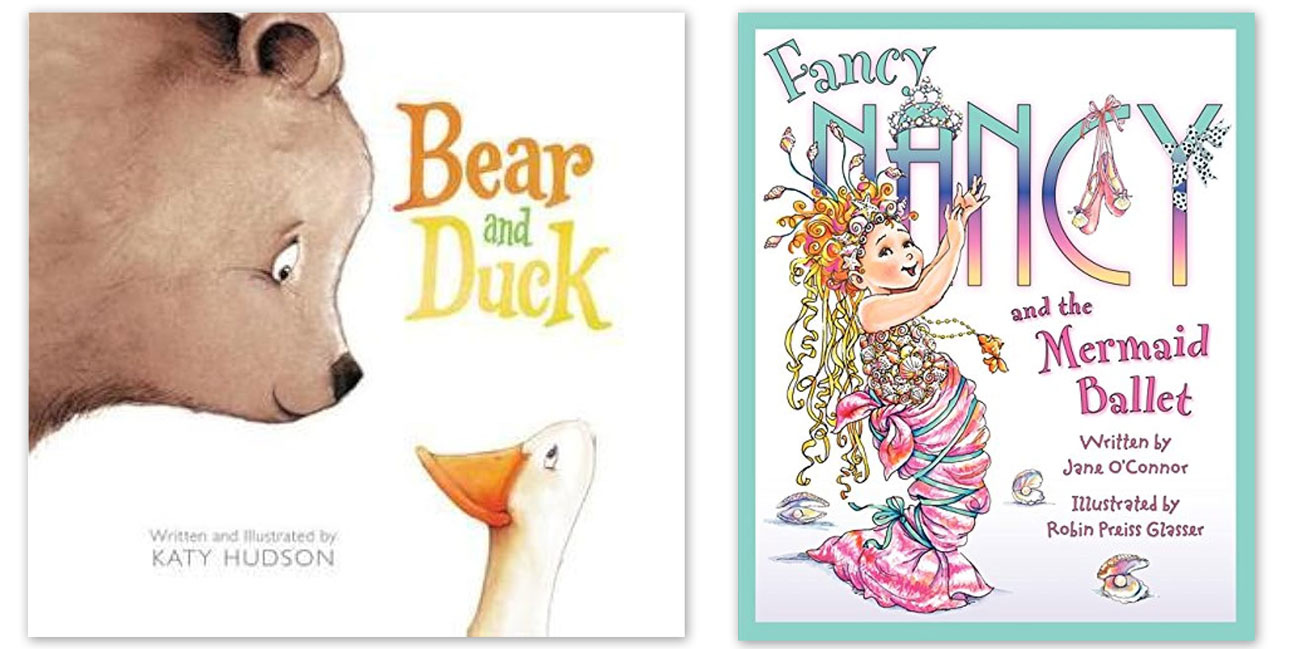
It can be something exaggerated, like Fancy Nancy’s love of big words and sparkly accessories, or something subtler, like Bear in Bear and Duck (by Katy Hudson) who’s awkward but committed and just wants to fit in.
Try this test:
If you swapped your character into someone else’s story, would their voice and behaviour still feel unique?
If not, they may need a clearer identity.
One way to create this is to decide on your character’s guiding trait - the quality that guides how they see the world. Then exaggerate it just slightly, enough to be distinct without becoming a caricature.
For example:
A character who’s always curious might constantly ask questions… even when they’re inconvenient.
A character who’s bossy might try to organise everyone, even if no one asked them to.
A character who’s cautious might bring a backpack full of supplies to a picnic, just in case.
These traits help children see themselves in the character, or recognise someone they know.
Quirks, Voice, and Challenges
Then you can take it one step further with quirks
Quirks make a character feel real and specific. They’re the little habits, oddities, or preferences that make someone unmistakably them.
In picture books, quirks are gold. They help the illustrator bring the character to life visually, and they give the story personality.
Here are some ways quirks can show up:
Speech quirks: a catchphrase, mispronunciation, or a unique way of expressing themselves
Behaviour quirks: always carrying a certain item, doing things in a particular order, reacting in unusual ways
Sensory quirks: being especially sensitive to sounds, textures, or smells
Consider Chester the cat in Chester by Mélanie Watt. With his red marker, he’s constantly trying to rewrite the story and steal the spotlight. That one quirk drives the entire book’s humour and structure.
Quirks work best when they:
Fit the character’s personality or emotional world
Show up more than once (so they feel consistent)
Create opportunities for humour, empathy, or growth

Then, there’s a way to add another layer to your picture book to make your character feel even more real.
This won’t apply to every story, especially not for silly, light-hearted books for ages 2 to 5. But for books aimed at slightly older children, or stories with more emotional weight, it can help to give your character a small personal challenge.
In other words, what does your character struggle with?
Not the external goal (we’ve already covered that) but something inside. A little issue they haven’t quite worked out about themselves.
Maybe they:
Talk too much because they’re nervous
Try to be perfect because they want to be liked
Push people away because they’re afraid of being left out
These small emotional knots give your character something to work through, and they give your reader something to feel.
When a character’s quirks are tied to a real emotion, they become more than just interesting or amusing. They feel honest and more real, and that makes your character more relatable.
Bringing It All Together
Let’s recap with a quick character checklist. Your character should feel:
Childlike, not childish - emotionally real, with a child’s perspective on the world.
Memorable, with at least one clear trait or pattern that sets them apart.
Quirky, with unique habits, behaviours, or expressions that bring them to life.
Challenged (optional), with a personal struggle they’re working through.
Add those layers, and your character will begin to shine, because they feel like someone real.
That’s the kind of character a child wants to read about again and again.
Can a Picture Book Have More Than One Main Character?
Yes.
Most picture books centre around a single main character, and that makes the story simple to follow, especially for very young readers. But if your concept is built on a relationship, a contrast, or a shared journey, then having two (or even three) main characters can work just as well.
Books like Sam and Dave Dig a Hole work because the characters share the same goal, but they approach it slightly differently. That contrast in how they think and act adds interest and creates humour as the story unfolds.
The key is clarity. If your characters are distinct and each plays a clear role in the story’s arc, young readers will follow along easily.
Let’s look at a few ways you can approach this.
When More Than One Main Character Works (and Why)
Adding a second main character needs to serve the story.
Here are a few reasons to consider a duo (or more):
Contrast: You want to show two different approaches, personalities, or beliefs.
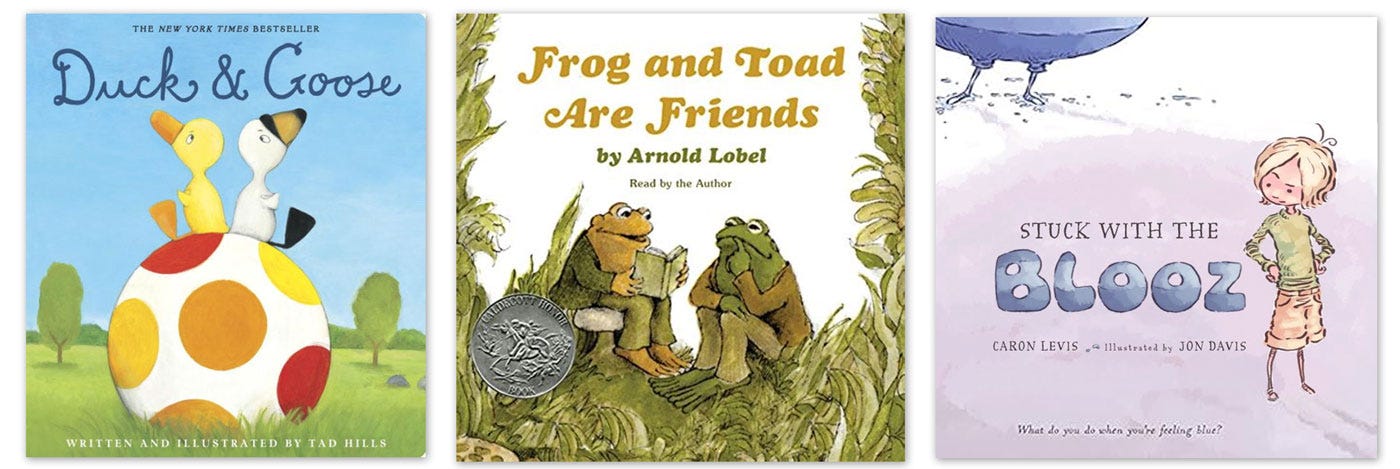
Example: Duck and Goose by Tad Hills - their differences drive the humour, events and emotion of the story.Collaboration: The characters need to work together to solve a problem.
Example: Frog and Toad are Friends by Arnold Lobel.Conflict and Resolution: A disagreement or misunderstanding between two characters becomes the heart of the story.
Example: Stuck with the Blooz by Caron Levis and Jon Davis explores emotion with subtle interplay between characters.
Many picture books with more than one main character blend these different dynamics (contrast, collaboration, conflict). But it can help to think about the main reason for having a duo, to keep your story on track and clear.
In each case, the second (or third) character isn’t just extra. They’re essential to the story’s arc.
So, more than one main character can work, but only if they’re distinct, balanced, and there for a reason.
The Challenge: Limited Word Count, Limited Space
Picture books are short. If your book is 500 words, and you try to give equal emotional weight and development to two (or more) main characters, things can get crowded — fast.
That’s why many dual-character picture books succeed by:
Keeping dialogue concise and ensure it contributes to the plot or character building
Letting illustrations do the heavy lifting
Focusing on one central shared problem
Using contrast or symmetry between characters
Think of Elephant and Piggie by Mo Willems. These books work because of contrast and simplicity. Their personalities are distinct, their conversations carry the story, and the illustrations deliver emotion, pacing, and humour.
In other words: the more characters you add, the simpler everything else must become.
Tips for Writing Dual (or Multi-) Main Character Picture Books
If your story has more than one main character, here’s how to keep it clear and interesting:
1. Make Each Character Distinct
They should differ in voice, perspective, and behaviour. Children need to be able to tell them apart instantly, in both the text and illustrations.
Are they opposites (e.g. cautious vs. daring)?
Do they express emotions differently?
Do they speak in different styles or rhythms?
If two characters feel too similar, they’ll blur together. That weakens the connection and confuses the emotional arc.
2. Keep Their Goals Aligned (or Clearly Opposed)
The characters should either want the same thing (possibly for different reasons), or want different things that are in conflict. This gives you tension off the bat.
If they’re cooperating: What’s their shared goal?
If they’re clashing: What does each one want, and how does that create conflict?
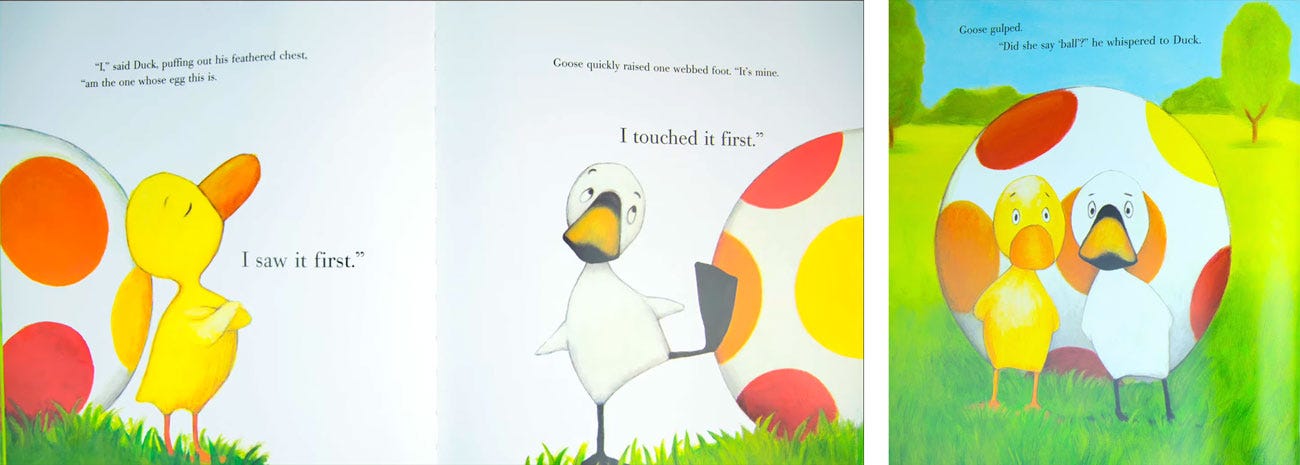
Interior pages from Duck and Goose by Tad Hills
3. The Relationship Could Drive the Story
In stories with more than one main character, the relationship often plays a central role. Sometimes the story is about what changes between the characters. When the relationship is the heart of the story, everything else–the plot, the humour, even the emotional payoff–comes from how these characters interact.
It’s not just about what happens. It’s about what happens between them.
This is why so many dual-character stories are about:
Friendship
Conflict and resolution
Teamwork
Misunderstandings and forgiveness
Children are constantly navigating relationships, like siblings, friends, and classmates, so stories that explore this have instant relevance.
4. Use Repetition, Rhythm, or Structure to Simplify
When juggling multiple voices, structure is your best friend.
That might mean:
A repeating line or question
Alternating perspectives page by page
A list-style format (like the letters in The Day the Crayons Quit)
These devices help young readers follow the story, even with multiple characters speaking.
When to Stick to One Main Character
Sometimes, adding a second main character feels tempting, but it’s not actually needed.
Here are signs your story might work better with just one main character:
One character is the emotional centre (feeling stuck, growing)
The other character doesn’t change or grow
The story’s message becomes muddled or split
The page count feels tight or rushed
In that case, you can still include the other character as a sidekick or catalyst, without giving them equal weight.
Over to You
If you’re developing a picture book character right now, take a moment to think: What makes them feel real?
Are they recognisably childlike - curious, emotional, full of wonder, maybe a little unpredictable?
Do they have specific traits or behaviours that make them feel like someone a child might know?
Do they talk and react in a way that feels true to a child’s age and view of the world??
Even one detail - a quirk, a contradiction, a little emotional challenge - can help children see themselves in your character.
And if you’re working with two main characters, you might also ask: what makes their relationship feel believable?
I’d love to hear where you’re at with your character(s). Let me know if this helped anything click into place!